 Locations


High-quality Zirconium Crowns in Hyderabad from in-house FMS Dental Lab
For many patients, the term “dental crown” can sound confusing or even intimidating. Is it cosmetic? Is it painful? Is it really necessary? The truth is, a dental crown is one of the most trusted and widely used treatments in modern dentistry, not to replace a tooth, but to save it, protect it and restore it to full function and natural appearance. FMS Dental provides the best dental crowns in Hyderabad for patients visiting all its branches.
A dental crown is essentially a custom-made protective covering that fits over a damaged, weakened or treated tooth. It is designed to restore the tooth’s strength, shape, chewing ability and aesthetics, allowing the patient to use the tooth comfortably and confidently for many years. When a tooth can no longer survive safely on its own, due to decay, fracture, root canal treatment or wear, a crown becomes the most predictable way to preserve it.
What many patients do not realize is that the success of a dental crown depends just as much on how it is made as on how it is placed. A crown is not a ready-made product; it is a precision medical restoration that must be individually designed for each patient’s bite, smile and facial harmony. Even the smallest error in fit or shape can affect comfort, chewing efficiency and long-term durability.
This is where modern dentistry has evolved significantly. With the integration of digital dentistry, CAD–CAM technology and in-house dental laboratories, dental crowns today are more accurate, natural-looking and long-lasting than ever before. Clinics like FMS that house their own advanced dental lab can control every stage of crown fabrication ensuring better fit, faster delivery and superior aesthetic results.
In this guide, we explain what a dental crown is, when it is required, how it improves your smile and oral health and why having a state-of-the-art in-house digital dental laboratory, like the one at FMS Dental, makes a meaningful difference in the final outcome.
A dental crown is a custom-made protective covering that is placed over a natural tooth to restore its strength, shape, function and appearance. Unlike a tooth filling, which repairs only a part of the tooth, a crown covers the entire visible portion of the tooth above the gums, acting like a strong outer shell.
In simple terms, when a tooth becomes too weak to function safely on its own, a crown gives it a second life.
A dental crown is designed to:
✅ Look like a natural tooth
✅ Withstand normal chewing forces
✅ Fit comfortably with surrounding teeth
✅ Blend seamlessly into your smile
Once cemented, the crown becomes a permanent part of your mouth and allows you to eat, speak and smile without fear of pain or breakage.

1️. After Root Canal Treatment: A root canal-treated tooth becomes brittle over time because its nerve and blood supply are removed. Without a crown, such teeth are at high risk of fracture.
Dental Crown = Protection + Long-term survival
2️. Broken or Cracked Teeth: When a tooth has visible cracks or fractures, a crown acts like a protective band, holding the tooth together and preventing the crack from spreading.
3️. Large or Deep Fillings: If a tooth has a very large filling, the remaining natural tooth structure becomes weak. Over time, this can lead to breakage.
A dental crown distributes chewing forces evenly and prevents further damage.
4. Severely Worn-Down Teeth: Teeth that are worn due to grinding, clenching or acid erosion often lose their natural shape and height.
Crowns restore the original tooth form and bite balance.
5. Discoloured or Misshapen Teeth
Some teeth may be:
In such cases, crowns improve both function and aesthetics, especially in visible front teeth.
6. Dental Implants: A crown is the visible part of a dental implant, the part that looks and functions like a natural tooth.
7. Dental Bridge:
When one or more teeth are missing, a dental bridge is used to replace them.
Dental crowns in a bridge:
Dental crowns act as strong pillars that hold the replacement tooth/teeth in place, restoring both function and appearance.
Dental crowns are as strong as natural teeth or sometimes even stronger than natural teeth. Dental crowns are designed to restore teeth that have been weakened by decay, fractures, large fillings or root canal treatment. One of the most common questions patients ask is whether a crowned tooth will be strong enough to function like a natural tooth. The answer is yes, when properly planned, fabricated and placed, dental crowns are engineered to withstand normal chewing forces for many years.
Modern dental crowns are not merely cosmetic coverings. They are biomechanical restorations that reinforce the remaining tooth structure and protect it from further damage. Their strength depends on several important factors, including the material used, the accuracy of fabrication, the bite design and the expertise of the treating prosthodontist.
Understanding Bite Forces and Crown Strength
During everyday activities such as chewing, teeth are subjected to significant pressure. Back teeth, especially molars, experience the highest bite forces because they are responsible for grinding food. Dental crowns are specifically designed to tolerate these forces and distribute them evenly across the tooth and su rrounding structures.
A well-designed crown:
✅Reinforces weakened tooth structure
✅Prevents cracks from spreading
✅Absorbs and distributes chewing forces
✅Protects the tooth from long-term fracture
When these principles are respected, a crowned tooth can function as reliably as a healthy natural tooth.
Dental crowns are fixed restorations used to restore the form, function, strength and appearance of teeth that have been structurally compromised. The selection of a crown type is a critical clinical decision and depends on multiple factors such as the location of the tooth, functional load, aesthetic requirements and long-term prognosis.
Based on material composition, dental crowns are broadly classified into metal crowns, metal–ceramic crowns, and all-ceramic crowns. Each category has specific indications, advantages, and limitations.
Metal crowns are among the earliest and most durable forms of dental restorations. They are fabricated entirely from metal alloys and are primarily indicated in areas where strength and longevity are prioritized over aesthetics.
Gold alloy crowns are composed of gold mixed with other metals to enhance strength. Despite their metallic appearance, they offer excellent biocompatibility and long-term clinical performance.
Gold alloy crowns are known for:
They are most commonly used for posterior teeth where aesthetics are less critical.


(Cobalt–Chromium, Nickel–Chromium Alloys)
Base metal crowns are fabricated from alloys such as cobalt–chromium or nickel–chromium. These materials offer high strength and corrosion resistance at a relatively lower cost compared to noble metals.
Key characteristics include:
However, their hardness may cause increased wear on opposing teeth and nickel-containing alloys may not be suitable for patients with metal sensitivities.
Metal-ceramic crowns combine a metal substructure with an outer porcelain layer. The metal provides strength, while the ceramic veneer enhances aesthetics.
These crowns have been widely used due to their balance of function and appearance. They are suitable for both anterior and posterior teeth when moderate aesthetic outcomes are acceptable.
Metal-ceramic crowns offer:
However, over time, the metal substructure may become visible near the gum margin and the ceramic layer is susceptible to chipping under excessive stress.


All-ceramic crowns are fabricated entirely from advanced ceramic materials and contain no metal components. They are widely preferred in contemporary dentistry due to their superior aesthetics and excellent tissue compatibility.
Zirconium (zirconia) crowns are made from high-strength ceramic materials known for their exceptional fracture resistance. They are particularly well-suited for posterior teeth and cases involving high functional load.
Zirconium crowns are characterized by:
Advancements in zirconia processing have significantly enhanced their translucency, making them suitable for both functional and aesthetic applications.
Lithium disilicate crowns, commonly known as E-max crowns, are valued for their superior optical properties. They closely mimic natural tooth enamel, making them ideal for anterior restorations and smile enhancement procedures.
E-max crowns offer:
They are typically recommended for front teeth and areas where aesthetics are the primary concern.
Clinical Considerations in Crown Selection
The choice of crown material is guided by:
✅Tooth position and functional demands
✅Amount of remaining tooth structure
✅Aesthetic expectations
✅Occlusal forces and bite dynamics
✅Long-term maintenance considerations
A comprehensive evaluation by a prosthodontist ensures that the selected crown type provides optimal function, durability, and aesthetics for each individual case.


Dental crowns can be fabricated using either conventional (analog) techniques or advanced digital workflows. The method chosen directly influences accuracy, fit, aesthetics and treatment time.
In the traditional approach, a physical impression of the prepared tooth is taken using impression materials. This impression is then sent to a dental laboratory, where technicians manually create a stone model and fabricate the crown through multiple laboratory steps. While effective, this method is more time-consuming and may be subject to minor inaccuracies related to material handling and transport.

At FMS Dental, crowns are crafted using a fully digital, in-house workflow that ensures precision, efficiency and superior quality control.
The process includes:
This in-house digital approach allows prosthodontists and master lab technicians to work closely together, resulting in crowns that offer exceptional fit, durability and natural appearance, often with reduced treatment time for the patient.
Achieving an excellent dental crown outcome depends on two critical pillars: clinical expertise and precision laboratory fabrication. At FMS Dental, these elements work in complete synergy to deliver predictable, long-lasting results. FMS Dental has a strong reputation for providing the best dental crowns in Hyderabad.
The foundation of a successful crown lies in meticulous clinical work. At FMS Dental, crowns are planned and executed by experienced prosthodontists (dental crown specialists) who focus on accurate tooth preparation, precise bite assessment and aesthetic harmony. This clinical precision ensures that the crown functions naturally and integrates seamlessly with surrounding teeth and gums.
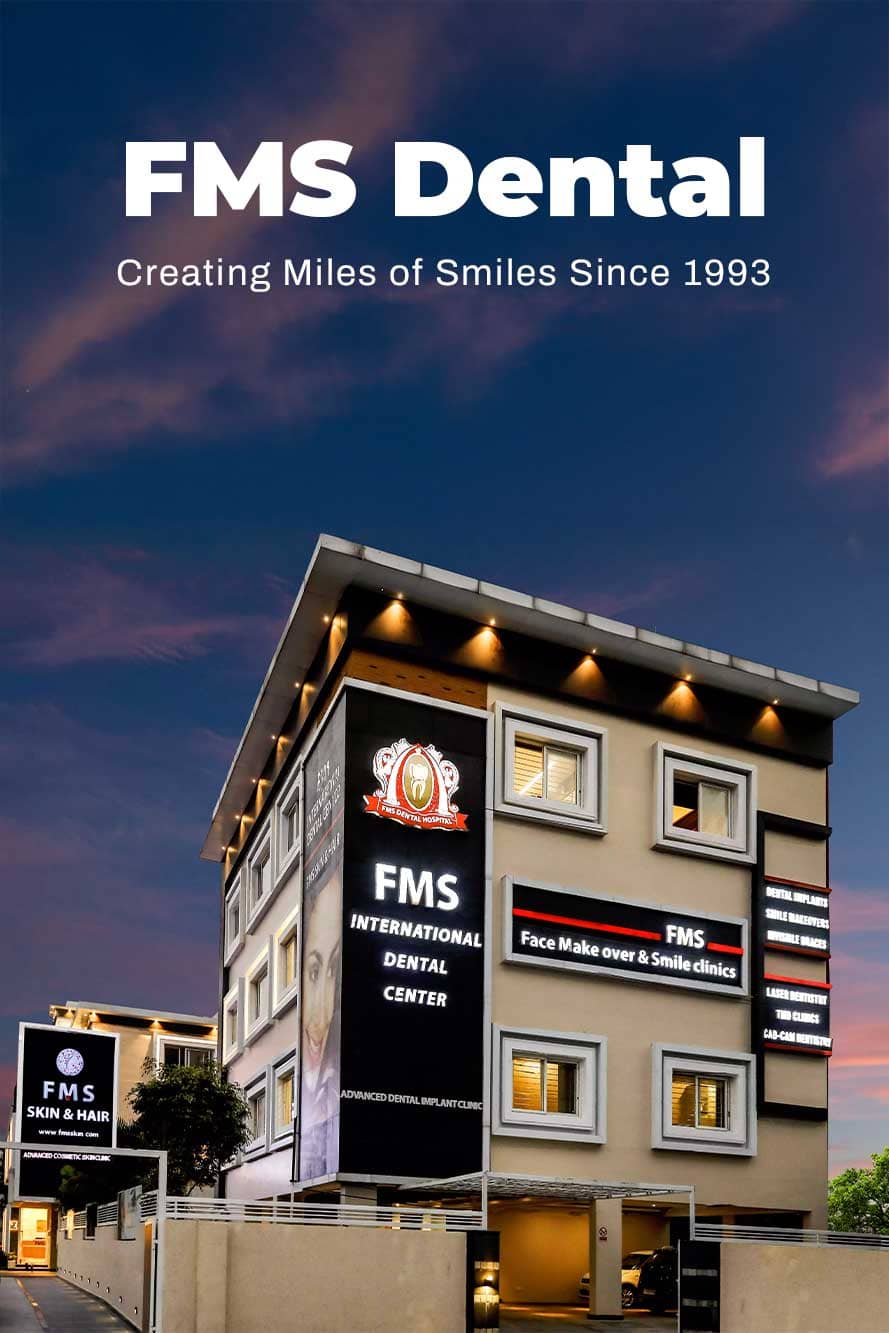

FMS Dental Lab plays a vital role in delivering superior crown quality. With a fully integrated, in-house digital laboratory, clinicians and technicians collaborate closely at every stage of fabrication.
This approach enables:
Together, expert clinical care and advanced in-house dental lab support allow FMS Dental to deliver dental crowns that meet the highest standards of strength, comfort and aesthetics.
An in-house digital dental laboratory plays a critical role in determining the accuracy, longevity and overall success of dental crowns. At FMS Dental, the integration of advanced laboratory technology within the clinical environment allows for complete control over every stage of crown fabrication.
✅Fastest Turnaround Times:
Firstly, turnaround times are significantly reduced. Since scanning, designing, milling and finishing are all performed on-site, crowns can be delivered in the shortest possible time without delays caused by outsourcing or transportation. This not only improves efficiency but also enhances patient convenience.
✅Assurance in Usage of Very High-Quality Materials:
Secondly, FMS in-house laboratory provides assurance of consistently high-quality materials. Every material used for crown fabrication is carefully selected, verified and handled under strict protocols, ensuring reliability, biocompatibility and long-term performance.
✅Real-Time Doctor–Technician Communication:
Thirdly, real-time communication between the Prosthodontist and the master technician is a major advantage. Immediate feedback, chairside adjustments and collaborative planning allow for precise customization of each crown, leading to superior fit, function and aesthetics.
✅Cost-Effective Treatment:
In addition, in-house fabrication is more cost-effective. By eliminating third-party laboratory dependencies, FMS Dental is able to maintain high standards of quality while offering transparent and competitive pricing to patients.
✅Always Supervised & Fabricated by Prosthodontist
Most importantly, every crown is continuously supervised and guided by a prosthodontist. From treatment planning to final placement, specialist oversight ensures that each restoration meets both clinical and aesthetic benchmarks.
Together, these factors ensure that crowns fabricated at FMS Dental deliver predictable outcomes, long-term durability and a level of precision that is difficult to achieve with outsourced laboratory workflows.
In a conventional setup, dental crowns are fabricated in external laboratories. Impressions or digital files are sent out, communication happens indirectly and any correction or modification requires additional time. Shade matching is often based on photographs or written instructions rather than real-time evaluation.
While this system works, it has limitations, especially in complex or high-aesthetic cases.
An in-house digital dental laboratory eliminates these gaps by bringing design, fabrication and clinical expertise together under one roof.
At FMS Dental, dental crowns are fabricated within a state-of-the-art in-house FMS digital dental laboratory, allowing complete control over every stage of the process, from design to final finishing. This integration ensures that clinical intent is translated accurately into the final crown.
For patients, this means crowns that feel more comfortable, fit more precisely and look more natural, often with fewer visits and adjustments.
Some of the direct patient benefits include:
Immediate refinements when required


At the heart of the FMS Dental Lab is advanced CAD-CAM milling technology, which allows crowns to be designed digitally and milled from high-quality materials with extreme precision.
The lab is equipped with globally trusted milling systems such as PM7 and MCXL 5 from Dentsply Sirona, along with Arum milling units. These machines produce restorations with micron-level accuracy, ensuring excellent marginal adaptation, optimal strength and smooth surface finish.
Using these systems, the lab fabricates:
For patients, this level of precision translates into crowns that seat comfortably, function naturally during chewing and maintain long-term stability.
Complementing the milling systems is a suite of advanced 3D printing technologies, including Phrozen Sonic Mega 8K, Nvision Tec and Asiga MAX. These world-class printers allow rapid and highly accurate production of supporting components that improve treatment planning and execution.
3D printing is used to fabricate:
By visualizing and validating each stage before final crown placement, treatment outcomes become more predictable and efficient.


One of the most significant advantages of an in-house lab is direct collaboration. Prosthodontists and master dental technicians work closely, often reviewing cases together and making refinements in real time. Aesthetic details such as tooth shape, contour and shade can be adjusted immediately, rather than through repeated back-and-forth.
This close coordination ensures that patient feedback is incorporated quickly and accurately, resulting in restorations that feel personalized rather than standardized.
When crown design, fabrication and placement are seamlessly integrated, the difference is noticeable, not just clinically, but experientially.
Patients receive crowns that:
A dental crown is only as good as the system that creates it.
At FMS Dental, the presence of an advanced in-house digital dental laboratory ensures that every crown meets the highest standards of precision, aesthetics and longevity, giving patients restorations they can trust for years to come.

Dental crowns are designed to be highly durable and capable of withstanding normal chewing forces; however, no dental restoration can be considered absolutely unbreakable. The strength and fracture resistance of a crown depend largely on the material used and the way it is fabricated and bonded.
Metal crowns and monolithic zirconium crowns are extremely strong and demonstrate excellent resistance to fracture, particularly at the crown–tooth junction. Due to their uniform structure and high flexural strength, failures at the joint are exceptionally rare when they are properly designed and cemented.
Ceramic crowns, especially layered or veneered ceramic restorations, provide superior aesthetics but may be more susceptible to chipping or fracture at the ceramic junction under excessive biting forces or unfavourable occlusal conditions. While these failures are uncommon with proper case selection, ceramics are inherently less tolerant to high stress compared to metal or monolithic zirconium.
In clinical practice, careful material selection, precise fabrication and accurate bite adjustment are essential to ensure long-term durability and performance of any dental crown.
The cost of a dental crown is influenced by several clinical and technological factors, rather than being a fixed, one-size-fits-all fee. At FMS Dental, crown pricing reflects the quality of materials used, the expertise of prosthodontists and the precision of in-house digital fabrication. The cost of a dental crown at FMS Dental depends on the type of material selected, aesthetic requirements, and clinical complexity.
As a general reference:
Unlike mass-produced restorations, every crown at FMS Dental is custom-designed and individually fabricated to suit the patient’s tooth, bite and aesthetic needs. This personalized approach ensures long-term comfort, durability, and natural appearance.
Factors That Determine Crown Cost
The overall cost of a dental crown depends on:
At FMS Dental, patients benefit from:
This integrated model allows FMS Dental to deliver international-quality crowns at transparent and competitive pricing.
At FMS Dental, dental crowns are fabricated and placed with long-term performance in mind. Warranty coverage varies based on the type of crown material and fabrication, reflecting their clinical behaviour and durability.
All warranty details are explained during treatment planning to ensure clarity and informed decision-making.
Disclaimer: Warranty coverage is subject to regular dental check-ups, proper oral hygiene, normal functional use and adherence to post-treatment care instructions.

Root canal treatment (RCT) is a commonly performed dental procedure that helps save a tooth that is severely infected or decayed…
In as many as my 25 years of experience, I’m yet to find a patient who is not worried about the way it would look after a dental treatment, especially to the front teeth…
Aconfident smile can transform not only your appearance but also your self-esteem, social interactions, and overall quality of life. With advancements in modern dentistry…
Jubilee Hills | Kondapur | Kukatpally | Madinaguda | Secunderabad | A.S.Rao Nagar | Kompally | Koti | Dilsukhnagar | Vanasthalipuram | Langarhouse | Panjagutta | Kochi, Kerala
A zirconium dental crown is a strong, metal-free ceramic crown that covers and protects a damaged tooth. It looks natural, is highly durable, and is commonly used for both front and back teeth.
Yes, zirconium crowns are completely safe and biocompatible. They are metal-free, gentle on gums, and widely recommended by prosthodontists for long-term dental restorations.
The best zirconium crown is one that is digitally designed, precisely fabricated, and placed by an experienced prosthodontist. Clinics like FMS Dental in Hyderabad specialize in advanced zirconium crown treatments using in-house digital labs.
Zirconium crowns are best planned and placed by prosthodontists, as they specialize in crowns, bridges, and full-mouth restorations, ensuring better fit, bite balance and aesthetics.
With proper care, zirconium crowns can last 10 to 15 years or more. Longevity depends on material quality, bite alignment and precision of fabrication.
Yes, zirconium crowns are stronger, more aesthetic, and metal-free. They do not cause dark gum lines and blend naturally with surrounding teeth.
Yes, zirconium crowns are ideal for back teeth because they can withstand heavy chewing forces while still offering good aesthetics.
Modern zirconium crowns are designed to closely resemble natural teeth. When fabricated digitally and layered properly, they are virtually indistinguishable from real teeth.
No, zirconium crown treatment is comfortable. Local anaesthesia is used during tooth preparation, and most patients experience minimal discomfort.
Typically, zirconium crown treatment requires 2 to 3 visits. Clinics with in-house dental labs, like FMS Dental, can often complete treatment faster.
The cost of zirconium crowns in Hyderabad depends on the quality of material, digital fabrication, and the expertise of the prosthodontist. Premium zirconium crowns offer better fit and longevity. Usually, the cost can start from Rs. 9000/- onwards.
FMS Dental has experienced prosthodontists and a state-of-the-art in-house digital dental lab, ensuring precision-crafted zirconium crowns with superior fit, strength, and aesthetics.
Yes, zirconium crowns are highly recommended after root canal treatment as they protect the tooth from fracture and restore full chewing function.
Yes, zirconium crowns are commonly used over dental implants and are designed to provide strength, stability and natural appearance.
No, zirconium crowns are gum-friendly. When properly designed and polished, they promote healthy gums and do not cause irritation.
Zirconium crown shade is digitally matched to your natural teeth. At FMS Dental, prosthodontists work closely with in-house lab technicians for accurate shade customization.
In-house FMS Dental lab allow direct coordination between prosthodontists and technicians, resulting in better fit, faster delivery and immediate refinements if needed.
Yes, zirconium crowns are commonly used to restore broken or cracked teeth, providing strength and preventing further damage.
Yes, zirconium crowns can be used in smile makeover treatments, especially when both strength and aesthetics are required.
Dental clinics with dedicated prosthodontists and advanced digital labs, such as FMS Dental in Hyderabad, specialize in zirconium crown treatments with predictable and long-lasting results.
The strength of a dental crown largely depends on the material from which it is made. Advances in dental materials have made modern crowns significantly stronger than older generations.
The key is selecting the right material for the right tooth, rather than assuming one crown type fits all cases.
Even the strongest material can fail if a crown is poorly fabricated or inaccurately fitted. Precision plays a crucial role in long-term crown success.
Crowns that are digitally designed and fabricated using CAD–CAM technology offer:
✅Superior marginal fit
✅Uniform material thickness
✅Balanced bite contact
✅Reduced stress points
When crowns are fabricated in advanced in-house digital dental laboratory like FMS Dental Lab, prosthodontists can closely monitor each step of production and fabrication, ensuring optimal strength and accuracy.
In many cases, yes. Teeth that require crowns are often already weakened. A properly designed crown can:
However, it is important to understand that a crowned tooth is still a natural tooth underneath. While the crown is strong, maintaining good oral hygiene and avoiding excessive force is essential for long-term success.
With proper care, high-quality dental crowns can remain strong and functional for 10 to 15 years or longer. Their durability depends on:
Crowns placed and monitored by prosthodontists tend to have better longevity due to precise planning and bite management.
Clinical Perspective
Dental crowns are not intended to exceed the strength of natural teeth, but to restore functional reliability and protect compromised structures. When executed according to established prosthodontic principles, they provide a durable and dependable solution for preserving natural teeth.