
Why Are My Gums Bleeding When I Brush?
If you notice blood in the sink after brushing or flossing, it is natural to wonder whether it is simply because you brushed too hard – or whether it could be a sign of something more serious.
Bleeding gums are one of the most commonly overlooked signs that something may be affecting your gum health.
While occasional bleeding can sometimes happen because of temporary irritation or aggressive brushing, persistent bleeding may indicate inflammation developing beneath the gumline.
Many people assume gum bleeding is normal and delay seeking care. However, early symptoms can sometimes signal the beginning of gum disease – a condition that can progress quietly over time if left untreated.
Do Bleeding Gums Mean Periodontitis?
Not necessarily.
Bleeding gums are often associated with gingivitis, the earliest stage of gum disease. At this stage, inflammation affects the gums but usually has not damaged the bone and tissues supporting the teeth.
Periodontitis, on the other hand, is a more advanced condition that develops when gum disease progresses deeper below the gumline. It can affect the supporting structures around teeth and may eventually lead to gum recession, bone loss, and tooth mobility if not treated appropriately.
Understanding the difference matters because recognising gum disease early can help prevent more complex dental problems later.
In this guide, we explain the key differences between bleeding gums and periodontitis, common symptoms, causes, treatment options, and how timely periodontal care can help protect your smile and long-term oral health.
Understanding the Gum Disease Progression
⚠ Bleeding Gums Are Often the First Warning Sign
Bleeding gums are often the first visible sign that something has changed. Early detection and treatment can help prevent the progression of gum disease and protect the long-term health of your teeth and supporting bone.
🟢 Gingivitis (Early Gum Disease)
- Usually caused by plaque accumulation
- Gums may appear red, swollen, or bleed easily
- No permanent bone damage
- Can usually be reversed completely
- Responds well to professional cleaning and oral hygiene improvements
🔵 Periodontitis (Advanced Gum Disease)
- Infection spreads deeper below the gums
- Supporting tissues and bone become damaged
- Gum recession and pocket formation may occur
- Can lead to loose teeth and tooth loss
- Can often be controlled and managed, but lost bone and tissue may not always be fully reversible
Understanding Bleeding Gums
Bleeding gums are most commonly caused by gingivitis, the early stage of gum disease.
It usually happens when plaque – a sticky layer of bacteria – builds up around the teeth and gums. Over time, this irritates the gums and causes inflammation.
As a result, the gums may become:
- Red
- Swollen
- Tender
- More likely to bleed while brushing or flossing
At this stage, the problem usually affects only the gums and has not yet damaged the bone supporting the teeth.
The good news is that gingivitis is usually reversible with proper dental care and good oral hygiene.
Common Causes of Bleeding Gums
Several factors can contribute to bleeding gums and increase the risk of gum disease.
Plaque & Tartar Build-Up
Poor oral hygiene allows bacteria to accumulate around the gums, leading to inflammation and bleeding.
Aggressive Brushing
Brushing too hard or using a hard-bristled toothbrush may irritate and damage gum tissue.
Hormonal Changes
Pregnancy, menstruation and menopause can increase gum sensitivity and make gums more prone to bleeding.
Vitamin Deficiencies
Low levels of Vitamin C or Vitamin K may weaken gum tissues and contribute to bleeding.
Certain Medications
Blood thinners and certain prescription medicines can increase bleeding tendencies and affect gum health.
Smoking & Tobacco Use
Tobacco weakens gum tissue, reduces healing capacity and significantly increases gum disease risk.
Medical Conditions
Conditions such as diabetes and other systemic diseases can affect gum health and increase susceptibility to infection.
Warning Signs of Early Gum Disease
Early gum disease can develop slowly and may not cause pain at first.
Common signs include:
- Bleeding while brushing or flossing
- Bad breath that keeps coming back
- Red or swollen gums
- Tender or sensitive gums
- Puffy gums
The good news is that early gum disease is usually easy to treat when identified early.
What Is Periodontitis?
Periodontitis is an advanced stage of gum disease that develops when early gum inflammation is left untreated.
This is the stage where patients may start noticing:
- Persistent gum bleeding
- Gum recession
- Gaps developing between teeth
- Tooth sensitivity
- Loose or shifting teeth
- Persistent bad breath
- Pus around gum tissue
- Pain while chewing
As the infection spreads deeper below the gums, it gradually damages the bone and tissues supporting the teeth.
If left untreated, periodontitis can eventually lead to significant bone loss and even tooth loss.
Unlike early gum disease, periodontitis usually requires professional periodontal treatment and long-term maintenance.
How Periodontitis Develops
Understanding how gum disease progresses helps patients seek treatment before permanent damage occurs.
Plaque Build-Up
Bacteria accumulate around the gumline.
Gingivitis Develops
Gums become inflamed, swollen, and bleed easily.
Bone Loss & Pocket Formation
Gums begin separating from teeth, creating pockets that trap bacteria.
Tissue & Bone Damage (Periodontitis)
Infection spreads deeper, damaging the supporting tissues and bone around teeth.
| Feature | Bleeding Gums / Gingivitis | Periodontitis |
|---|---|---|
| Disease Stage | Early | Advanced |
| Gum Bleeding | Common | Common and often persistent |
| Bone Loss | No | Yes |
| Gum Recession | Rare | Common |
| Tooth Mobility | No | Possible |
| Pain | Usually absent | May occur in advanced stages |
| Pocket Formation | Minimal | Deep periodontal pockets |
| Reversible | Usually yes | Damage may be permanent |
| Treatment | Professional cleaning + oral hygiene | Advanced periodontal therapy |
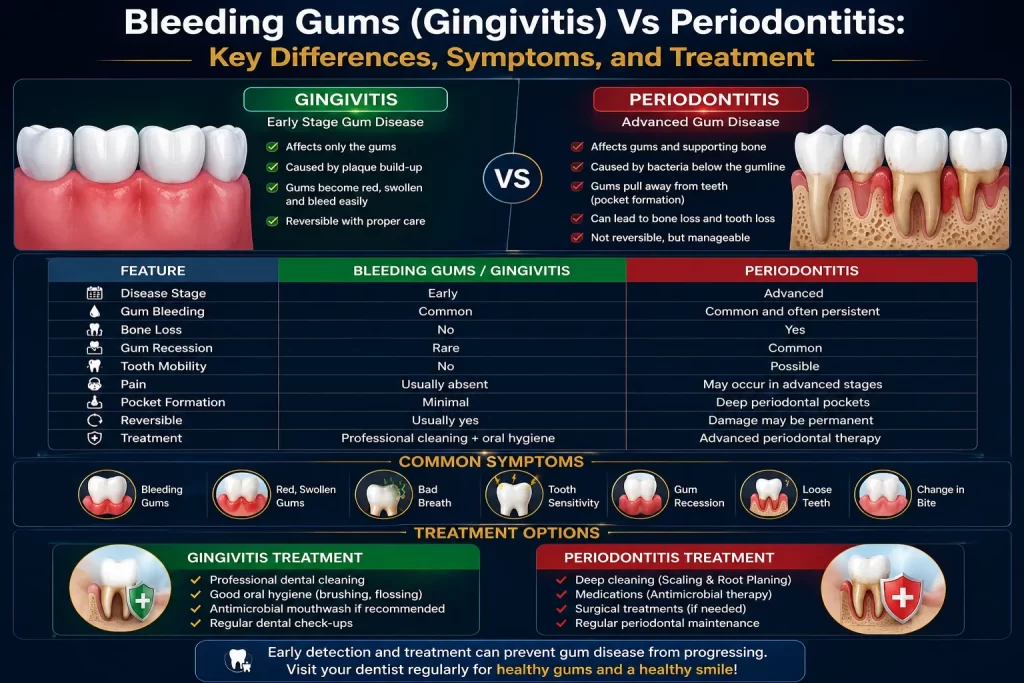
The biggest difference is simple:
Bleeding gums (Gingivitis) affect soft tissues. Periodontitis affects the structures supporting teeth.
Why Periodontitis Is More Than Just a Gum Problem
Gum health is closely connected to overall health.
Studies show that severe gum disease may affect other parts of the body as well.
- Diabetes – Gum disease can make blood sugar harder to control, and diabetes can also worsen gum problems.
- Heart Health – Long-term gum inflammation may be linked to heart and blood vessel problems.
- Pregnancy – Advanced gum disease has been associated with certain pregnancy complications.
- Respiratory Health – Bacteria from the mouth may affect lung health in some people.
This is why healthy gums are important not just for your teeth, but for your overall well-being.
How Dentists Diagnose Gum Disease
Dentists examine your gums to check whether you have early gum disease (gingivitis) or a more advanced condition like periodontitis.
This may include:
- Checking Your Gums – The dentist looks for bleeding, swelling, gum recession, and loose teeth.
- Measuring Gum Pockets – Small spaces between the teeth and gums are measured. Deeper pockets can be a sign of periodontitis.
- Dental X-Rays and Scans – Imaging tests such as OPG and CBCT scans help the dentist evaluate bone support, detect infection, and assess the severity of gum disease.
Early diagnosis can help prevent more serious gum problems and often makes treatment simpler.
Treatment for Bleeding Gums & Periodontitis
Early gum disease can often be reversed with simple professional care and improved oral hygiene. Advanced periodontitis requires specialised periodontal treatment to stop infection, preserve bone, and protect your teeth for the long term.
Treatment for Bleeding Gums
If bleeding gums are caused by early gum disease (gingivitis), treatment is usually simple, non-invasive and highly effective.
Treatment Options for Periodontitis
Periodontitis is a more advanced form of gum disease and usually requires professional periodontal therapy to control infection and preserve supporting bone and tissues.
LANAP: A Modern Laser Treatment for Gum Disease
Modern gum disease treatment has become more advanced and minimally invasive.
One newer option is LANAP (Laser-Assisted New Attachment Procedure), a laser-based treatment used for selected patients with moderate to advanced gum disease.
Instead of traditional gum surgery, LANAP uses specialised laser technology to remove infected tissue while preserving healthy gums.
Potential benefits may include:
- Less bleeding
- Reduced discomfort
- Faster healing
- Minimal tissue damage
- Greater patient comfort
A periodontist can determine whether laser gum treatment is suitable based on the severity of the condition and overall gum health.
Can Periodontitis Be Reversed?
This is one of the most common questions patients ask.
Early gum disease (gingivitis) can usually be reversed with proper treatment and good oral hygiene.
Periodontitis is different.
Once gum disease starts damaging the bone and tissues supporting the teeth, that damage may not fully heal naturally. However, treatment can help stop the disease from getting worse and protect the remaining bone and teeth.
The main goals of treatment are to:
- Control the infection
- Prevent further damage
- Preserve natural teeth
- Maintain long-term gum health
The earlier periodontitis is treated, the better the chances of protecting your teeth and gums.
How to Protect Your Gums?
Simple daily habits can help prevent gum disease:
- Brush Twice Daily – Use a soft-bristled toothbrush and brush gently.
- Floss Every Day – Removes plaque from areas brushing cannot reach.
- Visit Your Dentist Regularly – Helps detect gum problems early.
- Avoid Tobacco – Smoking increases the risk of gum disease.
- Maintain a Healthy Diet – Good nutrition supports healthy gums.
- Stay Hydrated – Saliva helps protect teeth and gums naturally.
When to See a Dentist
Do not wait for pain.
Book a dental evaluation if you notice:
- Frequent gum bleeding
- Persistent bad breath
- Red, swollen, or receding gums
- Gum swelling or tenderness
- Loose teeth
- Sensitivity while chewing
- Teeth shifting position
Pain is not always the first warning sign.
In many patients, gum disease progresses quietly until significant damage has already occurred.
Bleeding gums are often your body’s earliest warning sign that something is wrong.
Caught early, gum disease is usually much easier – and far less expensive – to treat.
The best treatment for periodontitis is preventing it from developing in the first place.
Why Early Treatment Matters
Bleeding gums often provide an early warning sign – an opportunity to identify gum disease before it progresses into more advanced stages.
Our expert periodontists frequently see patients who initially ignore bleeding gums, only to discover early signs of periodontal disease during a routine evaluation – reinforcing the importance of timely diagnosis and early intervention.
Addressing gum disease early can help:
- Prevent bone loss
- Reduce treatment complexity
- Preserve natural teeth
- Improve long-term oral health outcomes
Small symptoms today can become bigger problems tomorrow.
Early treatment often means simpler care, lower long-term treatment costs, and better outcomes for your oral health.
Why Choose FMS Dental for Gum Disease Treatment?
At FMS Dental, periodontal care focuses on early diagnosis, prevention, and advanced treatment approaches designed to preserve long-term gum health.
The periodontal team includes experienced specialists such as Dr. Murali Krishna, Dr. Aravinda, Dr. Shahnaz who diagnose and treat conditions ranging from early gum inflammation to advanced periodontal disease.
Patients have access to comprehensive periodontal services, including:
- Professional periodontal evaluation
- Scaling and root planing
- Gum disease management
- Bone regeneration procedures
- Advanced laser periodontal treatment options
- Long-term periodontal maintenance programs
For patients with moderate to advanced gum disease, treatment planning is customised based on disease severity, bone support, overall oral health condition, and long-term treatment goals.
To support precision-focused periodontal care, FMS Dental incorporates advanced laser technologies, including:
- Nd:YAG laser systems
- Er:YAG lasers
- Diode lasers
- Fotona laser technology
These technologies support minimally invasive periodontal care in selected cases and may help improve treatment precision, reduce tissue trauma, minimise bleeding, and support healing.
For eligible patients with advanced gum disease, modern laser-assisted approaches such as LANAP (Laser-Assisted New Attachment Procedure) may provide a minimally invasive alternative to conventional periodontal surgery.
Supported by specialist-led care and advanced dental technology, FMS Dental focuses on helping patients preserve healthy gums, protect natural teeth, and maintain long-term oral health.
Whether you notice occasional bleeding while brushing or symptoms of advanced gum disease, timely periodontal care can make a meaningful difference.
Final Thoughts
Bleeding gums and periodontitis may seem similar, but they represent different stages of gum disease.
Bleeding gums often provide an early warning sign – an opportunity to intervene before permanent damage develops.
Periodontitis is more advanced, but modern periodontal care can help control disease progression and support long-term oral health.
If you notice bleeding gums, persistent bad breath, gum recession, or changes in your teeth, seeking professional care early can make a meaningful difference.
Your gums protect your smile every day.
Protecting them today helps preserve your oral health for years to come.
Suffering from bleeding gums, Gum Diseases? Get advanced gum treatments at FMS Dental Clinics, Best Dental Clinic in Hyderabad. Specialized in advanced dental care treatments.
For Appointment Booking. Please call us or WhatsApp at 8885060770 or Email Us at contact@fmsdental.com

Prof. Dr. P. Parthasaradhi Reddy, M.D.S Founder & Chief · FMS Dental India
Frequently Asked Questions
Answers to the most common questions about bleeding gums, gingivitis and periodontitis.