By Dr. P. Shailaja Reddy, Senior Implantologist (Implant Dentist)
Missing teeth can affect your ability to chew, speak, and smile with confidence. For patients looking for a permanent solution, dental implants are the gold standard in tooth replacement. Unlike dentures or bridges, implants look, feel, and function like natural teeth, making them a long-term investment in your oral health.
In India, the cost of dental implants varies depending on the type of treatment:
- Single Dental Implant → ₹24,000–₹58,000
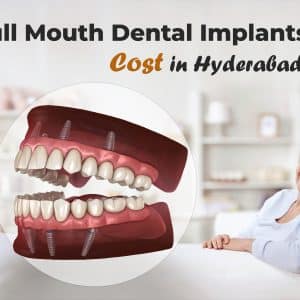
- Full-Mouth Dental Implants (All-on-4 / All-on-6) → ₹4,50,000–₹6,50,000 or more
This makes India one of the most affordable destinations for dental implants, especially when compared to Western countries, where a single implant may cost $3,000–$5,000 (₹2,50,000–₹4,00,000).
Factors That Influence Dental Implant Cost in India
- Implant Brand & System
Internationally trusted brands like Straumann and Nobel Biocare cost more than generic systems, but they offer higher success rates, precision, and durability. - Crown Material
Options include Zirconia, all-ceramic, or porcelain-fused-to-metal (PFM) crowns. Zirconia and ceramics offer superior aesthetics, while PFM is more budget-friendly. - Additional Procedures
Some patients may require bone grafting, sinus lifts, or soft-tissue procedures, which can add to the overall cost. - Clinic’s Infrastructure & Technology
Clinics equipped with 3D CBCT scans, CAD-CAM labs, and guided implant surgery systems ensure precision but may have higher treatment costs. - Dentist’s Expertise
The experience and training of the implantologist matter significantly. At FMS Dental, our senior implantologists have placed over thousands of implants, ensuring predictable and safe outcomes.
Dental Implant Prices & Options in India
| Treatment Type | Price Range (India) | Best For |
| Single Tooth Implant | ₹24,000 – ₹58,000 | Replaces one missing tooth with a natural-looking implant |
| All-on-4 Implants | From ₹5,00,000 per jaw | Fixed full-arch restoration using 4 implants; ideal for complete tooth loss and minimal bone in the jaws |
| All-on-6 Implants | ₹4,50,000 – ₹6,50,000 per jaw | Stronger full-arch option with 6 implants; provides more stability |
| Zygomatic Implants | ₹1,00,000 per jaw | For patients with severe bone loss; avoids bone grafting |
| Crown Options | ₹10,000 – ₹18,000 per crown | PFM crowns (budget) / Zirconia (durable + aesthetic) / All-ceramic (E.max) (premium natural look) |
Why Dental Implants Are Worth the Investment:
Functionality, Durability, and Natural Aesthetics
Dental implants are designed to mimic natural teeth in look, feel, and function. Unlike removable dentures, implants are anchored into the jawbone, restoring your ability to chew comfortably, speak clearly, and smile confidently. Made with titanium or zirconia fixtures and topped with high-quality crowns, implants are highly durable and, with proper care, can last a lifetime. They also prevent bone loss in the jaw, maintaining facial structure and giving a younger, healthier appearance.
Comparison with Dentures and Bridges
While dentures and bridges are more affordable initially, they often come with compromises:
- Dentures may slip, cause discomfort, and need replacement every 5–7 years.
- Dental bridges require the grinding of adjacent healthy teeth, potentially weakening them.
Implants, by contrast, are independent restorations—preserving natural teeth, providing superior stability, and requiring minimal maintenance.
Though the upfront cost of implants is higher, their long-term benefits and longevity make them a cost-effective investment compared to repeated replacements or repairs with dentures and bridges.
Success Rates of Premium Implant Systems
Global studies show that modern implant systems like Straumann and Nobel Biocare have a success rate of 95–98% over 10–15 years. These high-quality systems, combined with advanced imaging and placement techniques, provide reliable, predictable results.
Step-by-Step Process of Getting Dental Implants
1. Consultation and Planning (CBCT, Digital Scans)
The process begins with a comprehensive consultation. At FMS Dental, we use 3D CBCT scans, intraoral digital scanners, and advanced planning software to evaluate bone health, gum condition, and bite. This ensures your treatment is tailored with high precision. Using Digital Smile Design and guided implant planning, patients can preview their results even before surgery begins.
2. Surgery and Healing Phase
The implant placement procedure is carried out under local anesthesia or conscious sedation, making it virtually painless. The titanium implant is inserted into the jawbone, where it undergoes osseointegration (fusion with bone) over 3–6 months. In many cases, immediate loading implants allow patients to receive a temporary crown the same day.
3. Final Crown or Prosthesis Placement
Once the implant has integrated, a permanent zirconia, ceramic, or PFM crown is placed. For full-mouth rehabilitation, options include All-on-4, All-on-6, or zygomatic implants with fixed bridges. This final phase completes the transformation, restoring function, aesthetics, and long-term stability.
Advantages of Getting Dental Implants in India
Cost Savings Compared to Western Countries
India offers world-class implant dentistry at 30–70% lower costs compared to the USA, UK, or Australia. For example, a single implant in the US may cost ₹2.5–4 lakhs, while in India the same treatment costs ₹24,000–₹58,000, without compromising on quality.
Availability of Advanced Technology
Leading clinics like FMS Dental are equipped with CBCT imaging, CAD-CAM dental labs, 3D printing, intraoral scanners, and guided implant surgery systems. These advancements ensure maximum precision, safety, and predictability.
Experienced Implantologists and Dental Tourism
India has become a hub for dental tourism, attracting thousands of patients annually. At FMS Dental, internationally trained implantologists with 30+ years of expertise and 25,000+ implants placed deliver results on par with global standards. Our dedicated dental tourism team also assists with visa, stay, and travel arrangements, making treatment seamless.
FMS Dental’s Expertise in Implantology
- With a legacy of over 32 years in advanced dentistry, FMS Dental is recognized as one of the best dental implant centers in India.
- Experience: Our senior implantologists, including internationally trained specialists, have successfully placed over 25,000 implants.
- Infrastructure: FMS is an NABH-accredited dental hospital with in-house dental lab equipped with CAD-CAM, 3D printing, and digital implant planning facilities.
- Advanced Techniques: From All-on-4, All-on-6, zygomatic implants to immediate loading solutions, FMS offers the full spectrum of implantology.
- Global Recognition: Rated among the top dental centers in South Asia, FMS attracts patients worldwide for dental tourism in Hyderabad and Kochi.
- Patient-Centric Care: Every treatment is carried out with a balance of technology, expertise, and personalized planning, ensuring safe, predictable, and aesthetic outcomes.
Conclusion
Dental implants are more than just a tooth replacement, they are a life-changing investment in your health, confidence, and quality of life. With advancements like CBCT imaging, CAD-CAM technology, 3D printing, and guided surgery, implant treatments have become safer, faster, and more predictable than ever before. India continues to be one of the most affordable destinations for dental implants, offering world-class care at a fraction of the global cost.
At FMS Dental, Best Dental Implant Clinic in India, with over 32 years of expertise, NABH accreditation, 200+ specialists, and 25,000+ successful implants placed, patients can be assured of precision, safety, and natural results. Whether you require a single implant, full-mouth rehabilitation, or advanced solutions like zygomatic implants, our team combines technology, artistry, and experience to give you the smile you deserve.
Invest in your smile today—because a confident smile lasts a lifetime.
⚠Disclaimer: This blog is for educational purposes only and should not replace professional dental consultation. Please consult a qualified dentist for personalized advice.
Author Bio:

Prof. Dr. P. Shailaja Reddy, Implantologist
Chief of Implantology, FMS International Dental Center, Hyderabad, India
Head of Department of Implant Dentistry, SSCDS
With over 30 years of clinical expertise, she is regarded as one of the pioneers in Dental Implantology in Hyderabad and in South India. Under her leadership, FMS has grown into one of the best dental implant centers in India.
References
- Chappuis V, Buser D. Clinical long-term outcomes of dental implants with different surface technologies: a systematic review. Clin Oral Implants Res. 2023;34(3):203-219.
- Srinivasan M, Meyer S, Müller F. Economics and cost-effectiveness of dental implants: current evidence and future perspectives. Int J Prosthodont. 2024;37(2):123-131.
- Bidra AS, Daubert DM, Garcia LT, et al. Clinical practice guidelines for recall and maintenance of patients with tooth-borne and implant-borne restorations. J Prosthet Dent. 2023;130(1):1-14.
- Wang HL, Boyapati L, Chen S. Current concepts in bone augmentation for dental implants. Periodontology 2000. 2024;85(1):190-210.
- Pjetursson BE, Thoma DS, Jung RE, Zwahlen M, Zembic A. A systematic review of the survival and complication rates of implant-supported fixed dental prostheses after 10 years. J Clin Periodontol. 2025;52(2):144-160.
Extended FAQs
What is the minimum age for getting dental implants?
Dental implants are typically recommended after jaw growth is complete, usually 18 years and above.
Can elderly patients in their 70s or 80s get implants?
Yes. As long as the patient has sufficient bone and is medically fit, age is not a limitation for implants.
How do I know if I have enough bone for implants?
A CBCT scan evaluates bone height and density. If insufficient, procedures like bone grafting or zygomatic implants can be considered.
Can dental implants fail?
Though rare, failures can occur due to smoking, uncontrolled diabetes, or poor oral hygiene. Success rates exceed 95% with premium systems.
Are there different types of dental implants available?
Yes—endosteal (most common), subperiosteal, zygomatic, and immediate loading implants, depending on bone availability and case needs.
Can dental implants be done immediately after tooth extraction?
Yes. In select cases, immediate implant placement is possible, often with a temporary crown on the same day.
How do dental implants prevent bone loss?
Implants mimic natural tooth roots and stimulate the jawbone, preventing the bone resorption seen with dentures.
Do implants require special cleaning or care?
No special tools are needed. Brushing, flossing, and regular dental visits are sufficient to maintain implants.
How soon after implant placement can I get the final crown?
This depends on whether immediate loading implants are used. With modern systems, a temporary crown can often be placed the same day, while the final crown is fixed after 3–6 months of healing.
How long does a full-mouth implant treatment take?
Depending on bone health, it can be done in a few days with immediate loading implants or in 3–6 months with conventional protocols.
Can implants be placed if I have diabetes?
Yes, if diabetes is well controlled. Poorly managed diabetes increases implant failure risk.
Are implants safe for patients with heart conditions?
Yes, with proper medical clearance. At FMS, implant surgeries are performed with full medical support and safety protocols.
Do implants ever need to be replaced?
The implant itself can last a lifetime. The crown may need replacement after 10–15 years due to wear.
What foods should be avoided after implant surgery?
For the first week, avoid hard, spicy, or very hot foods. After healing, patients can eat normally.
How soon can I return to work after getting implants?
Most patients return to work within 24–48 hours after implant placement.
Can implants restore both function and facial aesthetics?
Yes. Implants not only restore chewing and speech but also support facial muscles, preventing a sagging or aged look.
Do implants feel like natural teeth?
Yes. Once healed, implants look and feel so natural that most patients forget which tooth was replaced.
What is the difference between All-on-4 and All-on-6 implants?
All-on-4: Uses 4 implants per arch, cost-effective, suitable for moderate bone. All-on-6: Uses 6 implants per arch, offers greater stability and strength.
Can smokers get dental implants?
Yes, but smoking significantly reduces implant success rates. Quitting or reducing smoking is strongly advised.
Can dental implants be combined with other cosmetic treatments?
Yes. Implants can be combined with veneers, clear aligners, gum contouring, and whitening as part of a full smile makeover, ensuring both function and aesthetics are addressed.