By Prof. Dr. P. Parthasarathi Reddy, Senior Cosmetic Dentist
If you’ve ever wondered why one clinic quotes ₹1,500 for a filling while another charges ₹4,000, or why dental implants can range from ₹20,000 to over ₹70,000, you’re not alone. Dental costs often seem confusing, but there’s a very logical explanation behind the differences.
Every smile, every tooth, and every treatment is different. The cost depends on what’s being treated, how it’s being done, and who’s doing it. Factors like diagnostic accuracy, quality of materials, use of technology, and the dentist’s expertise all influence the price and ultimately, the quality and longevity of your results.
Let’s break it down in simple terms so you can understand what you’re really paying for and why quality dental care is always worth the investment.
Diagnosis & Treatment Planning: The Foundation of Every Great Smile
Accurate diagnosis is truly the first step toward successful treatment. Think of it this way: if the problem isn’t seen clearly, it can’t be treated precisely. The technology used in diagnosis makes a huge difference in how accurately a dentist can plan your treatment.
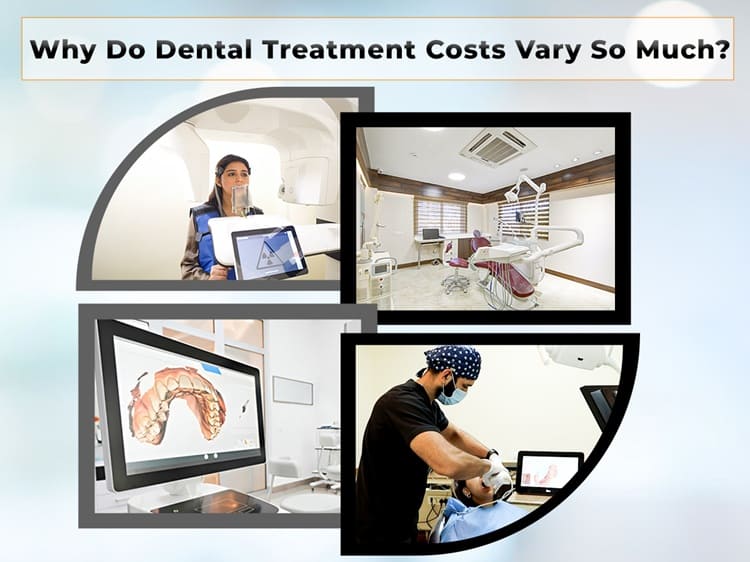
A highly experienced specialist dentist in a modern, well-equipped clinic will rely on advanced diagnostic tools like:
- CBCT scans (3D imaging) to assess bone levels, nerve positions, and hidden infections.
- Intraoral cameras for real-time visualization of even the smallest cavities or cracks.
- Digital scanners used for orthodontic or prosthetic planning with pinpoint accuracy.
- Smile design software (DSD) to digitally plan your ideal smile before starting treatment.
Clinics that depend only on visual checkups or basic X-rays may miss subtle issues that can grow into major problems later. While advanced diagnostics may seem like an additional cost, they actually save you money and discomfort in the long run by ensuring your treatment is accurate from the start.
Cosmetic Dentistry: Where Art Meets Precision
When it comes to cosmetic dentistry, the cost really depends on the details of your smile. Every smile is unique some may just need a little polishing, while others may need more extensive corrections. Naturally, major transformations cost more because they involve more time, expertise, and technology.
For example, indirect restorations like veneers or crowns cost more than simple bonding because they require additional steps like taking impressions, designing in the lab, and layering materials for a natural look. If digital impressions are used instead of traditional molds, that adds to the cost too, but with exponentially higher accuracy and almost zero margin for error.
High-quality mock-ups, precise shade matching, and the expertise of a cosmetic dentist trained in Digital Smile Design (DSD) all play a role in achieving that picture-perfect smile. These technologies and artistic details may increase the price, but they also dramatically enhance the quality and longevity of your results.
Even the material matters: a premium Emax veneer will cost more than a standard feldspathic porcelain one, but the esthetics, strength, and natural translucency are unmatched. Think of it less as an expense and more as a lifetime investment in your confidence and smile.
🦷Dental Implants: A Lifetime Investment in Your Oral Health
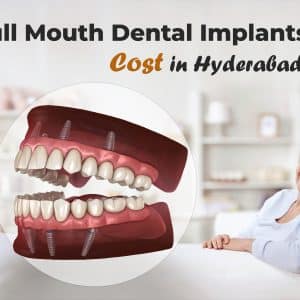
When you’re talking about dental implants, you’re talking about something that becomes a part of your body for life. So, it’s essential to see this not as a quick fix, but as a long-term investment in your health, comfort, and confidence.
Many patients notice wide variations in implant pricing and wonder why! The truth is, global implant systems like Straumann or Nobel Biocare cost more because they meet strict international standards, have decades of research backing them, and are proven to last longer. The cost of FDA-approved Implants is little more compared to affordable implants. On the other hand, when someone offers you a “budget implant” for ₹20,000 or so-be cautious. It often doesn’t include the crown (the visible tooth) or other necessary components. Always check for hidden costs before deciding.
The quality of the material placed in your bone plays a massive role in the implant’s success. Poor-quality or untested materials can cause long-term complications. Equally important is who performs the procedure- a trained implantologist with experience in precision angulation, drilling force control, and bone management can make all the difference between an implant that lasts decades and one that fails prematurely.
Advanced diagnostics like 3D CBCT scans help identify infections, bone density, and available space for accurate planning. In cases of bone loss, bone grafting may be needed to support the implant but again, the quality of graft material matters.
If your case involves zygomatic implants, the cost will naturally be higher due to the complexity and skill required. Similarly, guided implant surgeries, which use computer-generated templates for ultra-precise placement, add to the cost but dramatically enhance success rates.
For patients needing multiple implants, undergoing the procedure under general anesthesia can make the experience completely comfortable, though it will increase the total cost due to additional hospital and anesthesia fees.
In short, when it comes to implants, you get what you pay for. Always prioritize quality, expertise, and technology, because a well-placed implant doesn’t just replace a tooth; it restores your smile for life.
Restorative Dentistry (Fillings): Small Fixes with Big Differences
Not all fillings are the same and neither are the materials, techniques, or expertise behind them. The cost of a dental filling can vary depending on how deep or large the cavity is, where it’s located, and what materials are used.
A small surface filling on a front tooth, for example, is simpler and quicker than a large multi-surface restoration on a back molar. Clinics using high-quality composite materials and techniques like microscope-assisted dentistry or rubber dam isolation ensure far better precision, longevity, and comfort.
Even the type of filling material makes a difference: premium composites and ceramics offer superior aesthetics and durability compared to basic materials.
Yes, an experienced dentist may charge a little more, but that precision and craftsmanship help the filling last years longer and save you from future pain or repeat treatments. In dentistry, as in most things, quality work lasts longer and looks better.
Endodontic Treatments (Root Canal & Beyond): Saving Your Natural Teeth
Root canal treatments often sound intimidating, but modern technology has made them far more comfortable and predictable than ever before. The cost of an RCT depends on factors like tooth location, infection severity, and equipment used.
Advanced clinics use rotary endodontic systems, apex locators, and magnification tools that make the procedure faster, more precise, and less painful. The use of lasers for disinfection or microscope-guided root canal therapy adds to the accuracy and yes, the cost, but also greatly increases the success rate and comfort level.
A well-done root canal not only saves your tooth but also avoids the cost and hassle of an implant or bridge later. When performed by an experienced endodontist using modern technology, it’s a long-term investment in keeping your natural tooth healthy and strong.
Laser Dentistry: Redefining Precision and Comfort
Lasers have revolutionized modern dentistry by offering painless, bloodless, and faster-healing alternatives to traditional procedures.
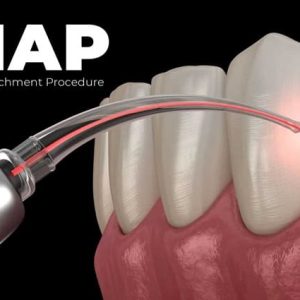
With lasers, we can treat gum disease, perform smile contouring, or even disinfect root canals, often without anesthesia! The comfort and precision they offer are unmatched.
However, not all lasers are the same. Basic diode lasers are useful for soft tissue procedures, but advanced Nd:YAG or Er:YAG lasers can perform far more complex treatments. The difference in technology (and cost) can be nearly tenfold, but so is the difference in outcome and healing comfort.
Few dentists are certified laser specialists, and their training ensures safety and effectiveness. So, while laser dentistry may seem more expensive, it’s truly an investment in comfort, precision, and long-term oral health.
Final Thoughts: Understanding True Value in Dental Care
When comparing dental costs, remember: you’re not just paying for a procedure. You’re paying for expertise, technology, materials, and the assurance that your treatment will last.
A lower price may look attractive at first glance, but it often comes at the cost of compromised materials, outdated equipment, or rushed work. Dentistry is one field where quality truly pays off in the long run.
At FMS Dental, we combine global technology, premium materials, and specialist expertise to ensure every treatment, from a simple filling to a full smile makeover — is done with precision, safety, and artistry.
We also believe quality dental care should be accessible. That’s why we offer personalized treatment plans suited to every patient’s goals and budget, without ever compromising on standards.
✨ Ready to Take the Next Step?
Your smile deserves the best. Book a consultation today at FMS Dental to experience world-class dental care — where technology meets trust, and every smile is crafted for a lifetime.
⚠Disclaimer: This blog is for educational purposes only and should not replace professional dental consultation. Please consult a qualified dentist for personalized advice.
Author Bio:

Prof. Dr. P. Parthasarathi Reddy, M.D.S
Dean, Sri Sai College of Dental Surgery
Head of Department of Cosmetic Dentistry, SSCDS
Founder & Chief of FMS Dental Hospitals, India.
With over 32 years of clinical expertise, he is regarded as one of the pioneers in cosmetic and implant dentistry in South Asia. Under his leadership, FMS has grown into one of the largest private dental centers in the world.
References
- Wayne, N. A. K. (2025). Examining the relationship between the quality of cost information and patient satisfaction in dental care. Journal of Dental Practice Administration, 12(2).
- Tatari, P. (2025). Costs in dental care: a scoping review of methodologies and trends. Journal of Dental Research.
- Joudi, A., Sargeran, K., & Hessari, H. (2024). To appreciate the influence of contributed determinants on dental care utilization in the context of socio-economic inequalities. International Journal for Equity in Health, 23(141).
- Ghoneim, A. (2024). Societal costs and benefits of comprehensive dental care: A systematic review. Community Dentistry and Oral Epidemiology.
- Krishnan, G. A. (2024). Comprehensive analysis of factors influencing patients’ preferences for dental treatments. Journal of Clinical and Diagnostic Research, 18(4).
Extended FAQs
Why do dental crowns have such a wide price range?
The cost of crowns varies based on material (metal, porcelain-fused-to-metal, zirconia, or Emax), fabrication method (manual vs. CAD-CAM), and lab quality. Digitally designed crowns made in advanced labs offer better fit, strength, and esthetics — making them slightly costlier but longer-lasting.
Do digital smile design and mock-ups increase the cost?
Yes, but for good reason. Digital Smile Design (DSD) involves high-end software, facial analysis, and trial mock-ups that allow patients to “preview” their smile before treatment — ensuring precision and satisfaction.
Why are full-mouth rehabilitation cases more expensive?
They involve multiple specialties (prosthodontics, implantology, endodontics, periodontics) working together, often over several visits. Such multidisciplinary coordination and precision lab work naturally raise the overall cost.
How do sterilization and infection control impact pricing?
Clinics with advanced sterilization systems (Class B autoclaves, disposable kits, UV chambers) have higher operational costs — but they protect patients from cross-infection. It’s an invisible cost that safeguards your health.
Why is dentistry more expensive in metro cities like Hyderabad?
Urban clinics invest in advanced technologies, digital equipment, and specialist consultants to maintain global standards. The cost reflects infrastructure quality and availability of highly skilled experts.
Are there affordable options for dental implants that are still safe?
Yes. Many global implant brands have economical variants with the same safety standards but fewer customizations. Discuss your case with an implant specialist who can balance quality and budget.
How do dental lab charges affect treatment cost?
Premium labs use CAD-CAM milling, layering artistry, and precision testing to create restorations that mimic natural teeth. Their fees add to treatment cost but ensure unmatched aesthetics and fit.
Do general dentists and specialists charge differently?
Yes. Specialists (like endodontists, prosthodontists, or implantologists) charge more for their focused expertise. However, their precision often leads to fewer complications and better long-term outcomes.
What is guided implant surgery, and why does it cost more?
Guided surgery uses 3D scans and computer-generated templates to plan exact implant placement. It minimizes surgical error, shortens recovery, and improves long-term success — making it a worthwhile upgrade.
How much does a smile makeover cost in India?
A smile makeover can range from ₹30,000 to ₹3,00,000 depending on the procedures involved — veneers, crowns, gum contouring, whitening, or orthodontics. The complexity and materials used define the final price.
Why are children’s dental treatments sometimes expensive?
A smile makeover can range from ₹30,000 to ₹3,00,000 depending on the procedures involved — veneers, crowns, gum contouring, whitening, or orthodontics. The complexity and materials used define the final price.
How does laser gum treatment compare to traditional gum surgery?
Laser treatment is painless, quicker, and heals faster without sutures. Although costlier than traditional methods, it offers greater comfort, minimal bleeding, and superior precision.
How do I ensure I’m getting quality care when choosing a clinic?
Look for clinics with an in-house lab, advanced imaging systems (like CBCT), and specialized doctors for each branch of dentistry. Transparent pricing and detailed treatment plans are good indicators of ethical practice.
Are diagnostic scans like CBCT really necessary for implants?
Absolutely. CBCT provides a 3D view of bone structure, nerves, and sinus positions — essential for safe and precise implant placement. It prevents complications that might cost much more to fix later.
How can I compare dental cost estimates accurately?
Ask for a written treatment plan that includes all components — scans, surgery, crown, anesthesia, and follow-ups. Comparing line-by-line ensures you’re evaluating total cost, not partial quotes.
Why do Emax or zirconia crowns cost more than metal ones?
These all-ceramic materials mimic natural enamel in color and translucency. They’re biocompatible, metal-free, and digitally fabricated — offering better longevity and esthetics at a higher but justified price.
Can poor-quality dental work increase long-term costs?
Yes. Inadequate materials or incorrect techniques can lead to pain, infection, or failure — requiring re-treatment or replacement. Investing in quality care upfront prevents future expenses.
What makes FMS Dental different in terms of treatment value?
At FMS Dental, each department is led by specialists with advanced training, supported by cutting-edge technology, global materials, and in-house digital labs — ensuring world-class quality at transparent prices.
Do I need to pay everything upfront for major dental treatments?
Not necessarily. Many clinics like FMS Dental offer phased or installment-based payment plans, especially for long-duration treatments like implants, aligners, or smile makeovers.
How can I estimate my total dental treatment cost before visiting?
Share your dental X-rays or photos with a trusted clinic’s dental tourism or consultation department (like FMS Dental’s online consultation wing). They can help you estimate your cost, duration, and treatment options before arrival.