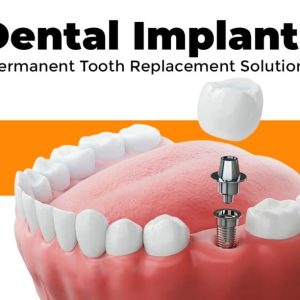
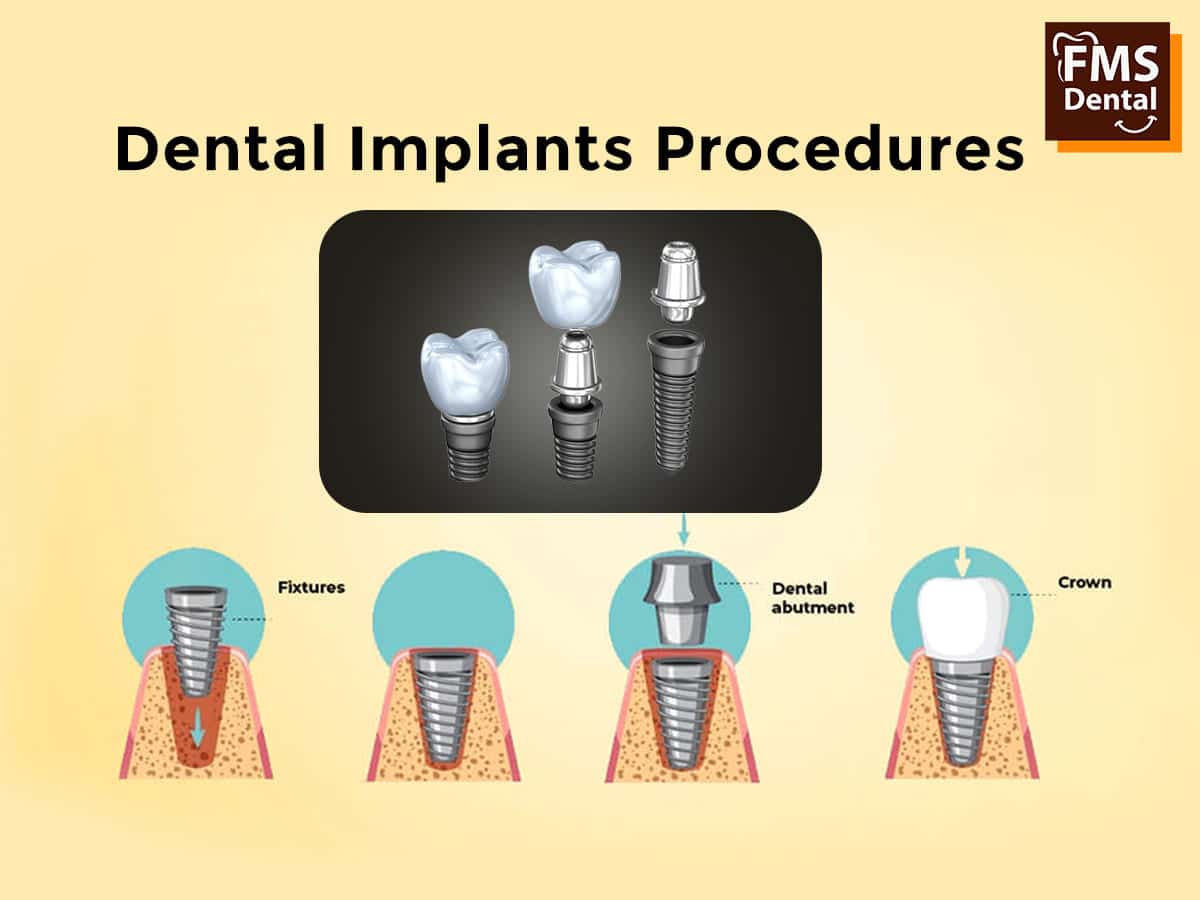
Dental implants are a popular fixed solution for replacing missing teeth. They are made of Titanium or Zirconia and they are surgically placed into the jaw bone to serve as an artificial root. Dental implants fuse with the natural bone in 5-6 months time through a process called osseo-integration. Later an abutment is fabricated and fixed over the implant over which a ceramic crown or a bridge is fixed to restore function and appearance.
Titanium (Grade IV or Grade V) is a popularly used implant material. It is known for its high strength, biocompatibility and ability to fuse with bone. It is resistant to corrosion and tends to be well tolerated by the body.
Zirconia is a newer alternative to titanium but less popular. It is non-metallic, making it a choice for patients who prefer a metal free option.
Benefits of getting fixed teeth replacement by utilizing dental implants:
Natural Appearance: Implants look and function like natural teeth, restoring the aesthetic of your smile. They are custom designed to match the colour and shape of your existing teeth.
Enhanced Comfort and function : Unlike removable dentures, which can shift or cause irritation, implants are securely anchored in your jaw bone, providing a more stable and comfortable fit. You can eat and smile with confidence without worrying about movement. Implants restore full chewing function, allowing for a wider variety of foods to be eaten comfortably.
Increased Confidence: Because dental implants mimic natural teeth so closely, they can significantly boost a person’s self esteem and confidence, allowing them to smile and speak freely leading to better social interactions and improved overall quality of life.
Better Speech: Unlike dentures that are bulky and that can slip and affect speech, implants are like natural teeth having a implant root and Implant crown. Hence the feel of natural size, shape, esthetics and functionality
Durability: Dental implants are designed to last for many years (often decades) with proper care, making them a long term investment. They are designed to last a long time, often 20+ years with proper care.
Bone Preservation: The implant stimulates the jaw bone, preventing bone loss that often occurs when a tooth is missing. This helps maintain facial structure
No Impact on Adjacent Teeth: Unlike bridges, which require modification of neighbouring teeth, implant treatment does not affect surrounding teeth, preserving their natural structure. This helps maintain the integrity of your natural teeth and gums.
Cost-Effectiveness Over Time: While dental implants might have a higher upfront cost compared to other options, their long lifespan can make them more cost effective in the long run. There is less need for replacements or adjustments over the years.
No Need for Removable Appliances: Implants are fixed in place, so you don’t have to worry about removing them for cleaning or maintenance, as you would with dentures.
Dental implant placement techniques :
Dental implant techniques have evolved significantly over the years. Here are the primary techniques used in dental implantology :
1. Traditional Two-Stage Implant Placement – (Involves Two surgical procedures)
First surgery: The implant is placed in the missing tooth area of the jaw and then covered with gum tissue to allow for osseo-integration (healing and bone integration) which takes about 5-6 months.
Second surgery: The implant is uncovered after 5-6 months and an abutment is attached to the implant either by screw or cement. Finally over the abutment the final prosthesis is constructed which is either a crown or a bridge.
2. Immediate Implant Placement (Single-Stage Implant)
The implant is placed immediately after tooth extraction in the same visit. Abutment placement is delayed by 5-6 months for osseo-integration to happen.
3. Immediate Loading (Teeth-in-a-Day)
The implant and a temporary crown or temporary bridge are placed on the same day. Also known as “Same-Day Implants”. These are indicated only in selective situations where the implants have to be placed in the aesthetic areas. Success rate is much lesser than two stage implant placement technique. Success is dependent on excellent primary stability.
4. All-on-4 and All-on-6 Implant Technique
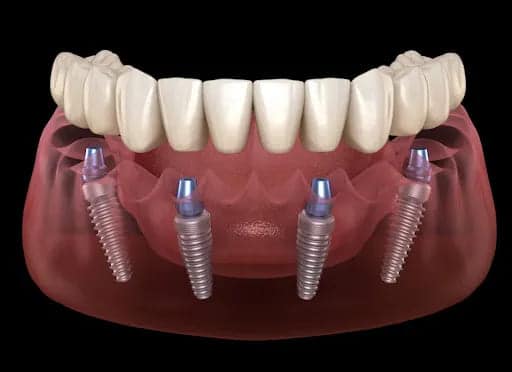
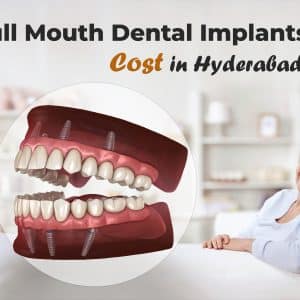
All-on-4 and All-on-6 Implant technique is chosen for full mouth rehabilitation in situations where there is extremely less bone in the posterior region of the jaw. Four to six implants are strategically placed in the anterior portion of the jaw to support a fixed full arch prosthesis having 12 to 14 teeth. Two long slanting implants are placed one on either side of the jaw which give support to the posterior teeth in the prostheses.
5. Zygomatic Implants
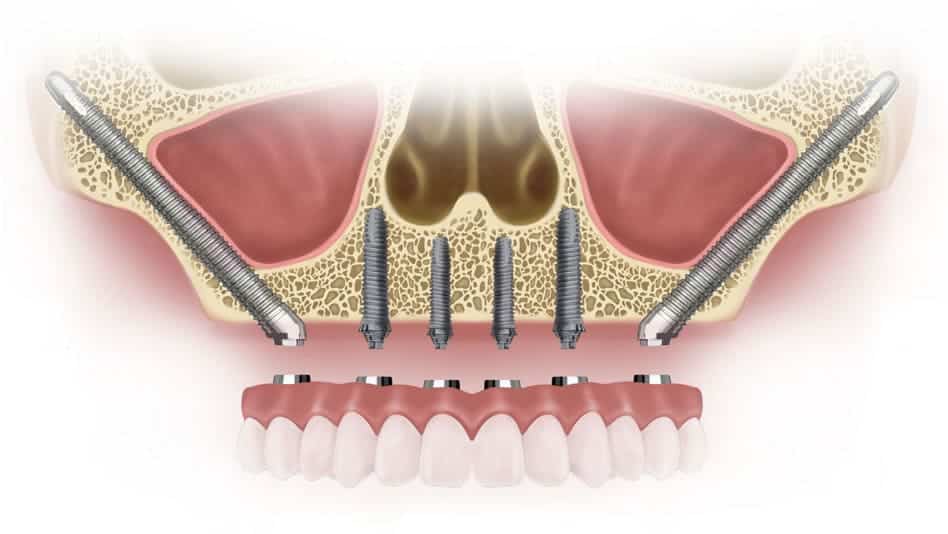
Indicated for patients with severe maxillary bone loss. Two Long implants are anchored in the zygomatic (cheek) bone one on either side instead of the maxilla. Prostheses are constructed taking support of these implants. Sometimes four long Zygomatic implants are placed, two on each side which are referred to as “QUAD ZYGOMA” to improve the support.
6. Mini Dental Implants (MDIs)
Used for patients with limited bone volume anteriorly and posteriorly in the jaw and for stabilizing complete dentures. Two straight implants are placed in the anterior region of the jaw near the canine area and they are connected with a bar. The denture will have a clip to hold onto the bar. These dentures are removable but will have reasonably good tightness. Alternative to a bar would be a ball and socket or a magnetic attachment.
7. CBCT Guided Implant Surgery (Computer-Assisted)
Uses digital scans, CBCT imaging and 3D printing for precise implant placement. Surgical guides are fabricated in the dental laboratory utilizing the CBCT image data, and implants are placed through these guides in to the bone. These surgical guides greatly reduce surgical errors and ensure optimal implant positioning.
8. Pterygoid Implants
These are placed in the pterygoid region of the maxilla which is the most posterior extent of the maxilla or the upper jaw. This is suitable for patients with maxillary bone loss. This technique also avoids the need for sinus lift procedures.
9. Sub-periosteal Implants
These are placed below the gums below the periosteum but above the bone. Used for patients with severe bone loss who cannot undergo bone grafting. The custom made framework supports the prosthesis. This technique is not used much now a days.
10. Basal Implants (Cortical Implants or Single piece implant)
These basal implants are designed in such a way they engage to the cortical bone for strong anchorage. Implant and the abutment are in single piece. Abutment of the implant is trimmed to create space for a crown or bridge prostheses. This is suitable for patients with minimal bone. Allows immediate loading in many cases.
Conclusion:
Dental implants have transformed modern dentistry, offering a permanent and highly effective solution for replacing missing teeth. At FMS Dental Clinics, we specialize in advanced dental implant procedures and techniques to ensure long-lasting results with optimal functionality and aesthetics. Whether you need a single tooth implants, full-mouth rehabilitation, or complex implant procedures, our team of experienced Dental Implantologists employs cutting-edge techniques for the best outcomes. Consult FMS Dental Clinics. For all advanced dental treatment procedures.
Book you consultation for Dental Implants at FMS International Dental Center – Advanced Dental Implant Clinic, Jubilee Hills, Hyderabad. Rated as the top best Dental Implant Clinic in India.
For Appointment Booking. Please call us or WhatsApp at 8885060770 or Email Us at [email protected].