
“My Dentist Says I Need Flap Surgery for My Gums. Is My Condition Really That Serious?”
It’s one of the most common questions patients ask after being told they may need periodontal surgery.
For many people, the term flap surgery immediately raises concerns:
If you’ve been asking yourself these questions, you’re not alone.
The reality is that flap surgery is usually recommended when gum disease has progressed beyond what non-surgical treatments can effectively manage. While that may sound worrying, the recommendation is often made for a positive reason:
In fact, periodontal flap surgery remains one of the most effective treatments for advanced gum disease, helping patients preserve their natural teeth and restore healthier gums for the long term.
A Situation Many Patients Never Expect
Imagine you’ve been brushing twice a day for years, yet your dentist tells you that the bone supporting your teeth is shrinking and surgery may be necessary.
This is a situation many patients with advanced gum disease face. The surprising part is that gum disease often progresses silently, causing significant damage before noticeable symptoms appear.
Unlike a cavity, which may eventually cause pain, advanced gum disease can continue destroying the tissues and bone that support your teeth without obvious warning signs. By the time teeth begin to feel loose or gums start receding, the condition may already have progressed significantly.
This is exactly why procedures such as flap surgery play such an important role in modern periodontal treatment.
Why Gum Disease Becomes Serious When Left Untreated
Most people associate gum disease with occasional bleeding while brushing.
Dentists view bleeding gums differently.
It is often one of the earliest warning signs that harmful bacteria have begun affecting the tissues beneath the gumline.
In the early stage, known as gingivitis, symptoms may include:
- Bleeding while brushing or flossing
- Red or swollen gums
- Persistent bad breath
- Mild gum tenderness
At this stage, treatment is usually straightforward and the condition is often reversible.
However, when gingivitis is ignored, the infection can spread deeper below the gums and begin damaging the tissues and bone that support the teeth.
This advanced stage is known as periodontitis.
As the disease progresses:
- Gums start pulling away from the teeth
- Deep periodontal pockets develop
- Bacteria multiply below the gumline
- Supporting bone gradually deteriorates
- Teeth may become loose
One of the biggest challenges with advanced gum disease is that it often progresses quietly. Many patients experience very little discomfort until significant damage has already occurred.
The Journey of Gum Disease
| Stage | What Happens |
|---|---|
| Healthy Gums | Firm, pink gums with minimal pocket depth |
| Gingivitis | Bleeding and inflammation begin |
| Early Periodontitis | Infection spreads below the gumline |
| Advanced Periodontitis | Deep pockets and bone loss develop |
| Risk of Tooth Loss | Teeth may become loose due to loss of support |
| Treatment Phase | Professional periodontal treatment becomes necessary |
| Maintenance Phase | Ongoing care helps preserve teeth and gum health |
What Exactly Is Flap Surgery?
Think of flap surgery as a way for a periodontist to access areas that cannot be properly cleaned from the outside.
When periodontal pockets become deep, bacteria and hardened tartar deposits accumulate far below the gumline. These areas may be difficult or impossible to clean thoroughly using brushing, flossing, or even conventional deep cleaning procedures.
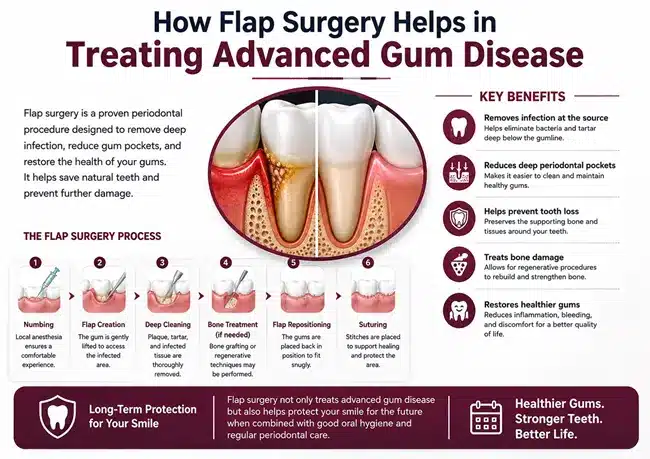
During flap surgery, the gum tissue is gently lifted away from the teeth, creating access to the infected areas underneath.
This allows the periodontist to:
- Remove deep bacterial deposits
- Eliminate hardened tartar
- Thoroughly clean root surfaces
- Remove diseased tissue
- Evaluate and treat underlying bone defects when necessary
Once the area has been cleaned, the gums are repositioned and secured with sutures to support healing.
The goal is simple: remove infection, reduce pocket depth, and create healthier conditions for the gums and supporting bone.
Why Isn’t Deep Cleaning Enough?
One of the most common questions patients ask is:
“I’ve already had a deep cleaning. Why do I still need surgery?”
The answer depends on the depth of the periodontal pockets.
In healthy gums, the space between the tooth and gum is shallow and easy to maintain.
In advanced gum disease, however, these spaces become much deeper.
When pockets reach a certain depth:
- Bacteria become harder to remove completely
- Instruments cannot always access every infected surface
- Inflammation continues
- Bone loss may progress despite treatment
Flap surgery provides direct visibility and access, allowing the periodontist to clean these areas more effectively than non-surgical methods alone.
Could Your Symptoms Indicate the Need for Flap Surgery?
| What You Notice | What It Could Mean |
|---|---|
| Gums bleed regularly despite treatment | Persistent inflammation below the gumline |
| Deep pockets around the teeth | Bacteria accumulating in areas that are difficult to clean |
| Loose or shifting teeth | Loss of supporting bone and gum attachment |
| Receding gums | Progressive periodontal tissue damage |
| Persistent bad breath | Ongoing bacterial infection beneath the gums |
| Gum disease that keeps returning | Infection may be too deep for non-surgical treatment alone |
How Flap Surgery Helps Save Teeth
It Removes Infection at Its Source
The primary purpose of flap surgery is to eliminate the infection responsible for periodontal disease. By directly accessing deep pockets around the teeth, the periodontist can remove bacteria, tartar, and infected tissue that may otherwise remain hidden beneath the gums.
It Reduces Deep Periodontal Pockets
Reducing pocket depth makes it easier to maintain healthy gums and lowers the risk of future infection.
It Helps Prevent Tooth Loss
By controlling infection and preserving supporting tissues, flap surgery can significantly improve the chances of keeping natural teeth.
It Allows Treatment of Bone Damage
When appropriate, regenerative procedures such as bone grafting or guided tissue regeneration may be performed to improve support around affected teeth.
It Creates Healthier Gums
- Less bleeding
- Less swelling
- Fresher breath
- Improved comfort while eating and brushing
Before and After Flap Surgery: What Changes?
| Before Flap Surgery | After Healing and Maintenance |
|---|---|
| Deep periodontal pockets trap bacteria | Reduced pocket depths that are easier to clean |
| Persistent gum inflammation | Healthier, firmer gum tissue |
| Ongoing bacterial infection | Significant reduction in harmful bacteria |
| Difficulty maintaining oral hygiene | Improved access for brushing and flossing |
| Increased risk of tooth loss | Better long-term tooth stability |
| Progressive periodontal damage | Disease progression is controlled |
What Happens During Flap Surgery?
Local Anaesthesia
The treatment area is numbed for comfort.
Accessing the Treatment Area
Small incisions are made to gently lift the gums.
Deep Cleaning
Plaque, tartar, bacteria, and infected tissue are removed.
Bone Treatment (If Required)
Regenerative procedures may be performed if bone defects are present.
Repositioning the Gums
The gums are placed back into a healthier position.
Suturing
The tissue is secured with stitches to support healing.
Myth vs Fact: Understanding Flap Surgery
| Myth | Fact |
|---|---|
| Flap surgery means my teeth cannot be saved | Flap surgery is often recommended to help save teeth |
| The procedure is extremely painful | Modern anaesthesia makes treatment comfortable |
| Surgery cures gum disease permanently | Ongoing maintenance is still essential |
| Only older adults need flap surgery | Gum disease can affect adults of various ages |
Recovery After Flap Surgery
Healing is generally straightforward when patients follow instructions carefully.
Most Patients Experience
| Time Period | What Most Patients Experience |
|---|---|
| First 24 Hours | Mild bleeding, tenderness, and swelling |
| Days 2–3 | Swelling may peak and then gradually improve |
| Days 4–7 | Improved comfort and healing |
| 1–2 Weeks | Significant healing with reduced sensitivity |
| 3–6 Weeks | Continued tissue adaptation |
| 3–6 Months | Long-term periodontal reassessment and maintenance planning |
Why Patients Trust FMS Dental for Periodontal Treatment
Successful periodontal treatment requires more than simply removing infection.
It requires accurate diagnosis, careful treatment planning, surgical expertise, and long-term maintenance.
At FMS Dental, periodontal flap surgery is performed by an experienced team of periodontists, including Dr. Murali Krishna, Dr. Aravinda, and Dr. Preethi Krishnan, who routinely manage complex cases of gum disease, periodontal bone loss, and tooth-supporting tissue damage.
Patients benefit from:
- Advanced periodontal diagnostics
- Evidence-based treatment protocols
- Digital treatment planning
- Regenerative periodontal procedures when indicated
- Personalized maintenance programmes
The goal is not simply to treat infection today but to help patients preserve their natural teeth for years to come.
Flap Surgery Is About Saving Teeth, Not Losing Them
Advanced gum disease can feel overwhelming, especially when surgery enters the conversation. But flap surgery is not a sign that you’ve run out of options – it is often the step that helps preserve the options you still have.
By addressing infection below the gumline and protecting the structures that support your teeth, flap surgery can play a critical role in helping patients maintain their natural smile for years to come.
If your dentist or periodontist has recommended flap surgery, asking questions and understanding the procedure is the first step toward making an informed decision. With timely treatment, proper maintenance, and expert periodontal care, many patients are able to preserve their teeth and enjoy healthier gums for years to come.
Disclaimer:
The information provided in this blog is intended for educational and informational purposes only and should not be considered a substitute for professional dental advice, diagnosis, or treatment. Every patient’s oral health condition is unique, and treatment recommendations may vary based on individual needs. If you are experiencing symptoms of gum disease or have concerns about your oral health, consult our qualified dental periodontist for a comprehensive evaluation.
Looking for treatment for advanced gum diseases. Consult FMS Dental Clinics, Best Dental Clinic in Hyderabad. Specialized in advanced dental care treatments.
For Appointment Booking. Please call us or WhatsApp at 8885060770 or Email Us at contact@fmsdental.com

Prof. Dr. P. Parthasaradhi Reddy, M.D.S Founder & Chief · FMS Dental India
Frequently Asked Questions
References:
- Cortellini, P., & Pini Prato, G. (2012). Coronally advanced flap and combination therapy for root coverage. Clinical strategies based on scientific evidence and clinical experience. Periodontology 2000, 59(1), 158-184.
- Prato, G. P., Clauser, C., & Cortellini, P. (1995). Periodontal plastic and mucogingival surgery. Periodontology 2000, 9(1), 90-105.