
Neither a single-sitting root canal nor a multiple-sitting root canal is inherently better. The right option depends on the condition of the tooth, the extent of infection, and what gives the tooth the best chance of long-term success.
Many patients also wonder whether needing multiple appointments means paying more for treatment. At FMS Dental Kompally, a root canal does not cost more simply because it is completed over multiple visits. Whether your treatment is performed in a single sitting or requires additional appointments, the cost is based on the condition of the tooth, the extent of infection, and the complexity of treatment rather than the number of sittings involved. The decision to recommend a single-sitting or multi-visit root canal is always made based on what is best for the long-term health of your tooth, not the number of appointments required.
At FMS Dental Kompally, senior Endodontist Dr. Sandeep Eleti recommends a treatment approach based on clinical findings rather than convenience alone. While many root canals can be completed successfully in a single visit, others benefit from a multi-visit approach that allows better infection control and healing.
What Is a Single-Sitting Root Canal?
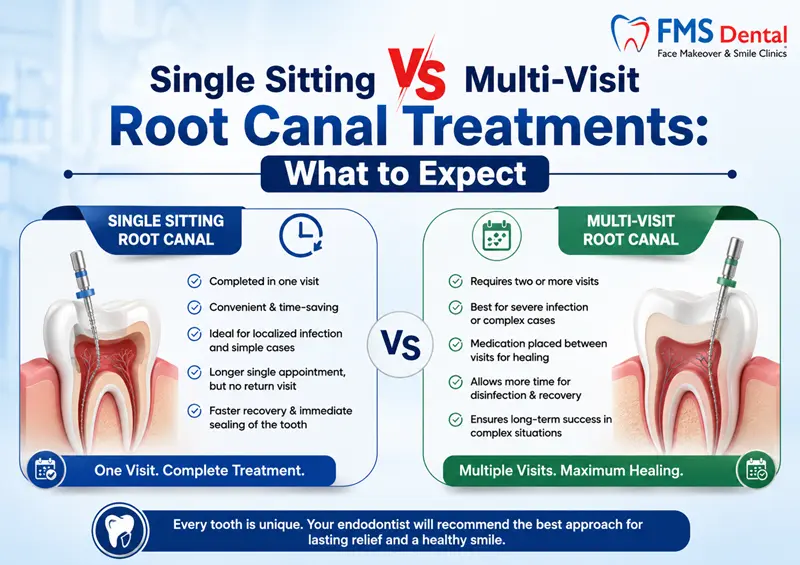
A single-sitting root canal treatment is completed in one appointment. During the visit, the infected pulp is removed, the root canals are cleaned and disinfected, and the tooth is sealed.
Advances in rotary endodontics, magnification, and laser-assisted dentistry have made single-visit root canal treatment possible for many patients.
Advantages of Single-Sitting Root Canal Treatment
- Only one dental appointment
- Faster completion of treatment
- Less time away from work or daily activities
- Reduced travel requirements
- Immediate relief from symptoms
- Greater convenience for patients with busy schedules
What Is a Multi-Visit Root Canal?
A multiple-sitting root canal is completed over two or more appointments.
During the first visit, the infected canals are cleaned and disinfected. In certain cases, medication is placed inside the canals to continue eliminating bacteria before the final filling is completed during a subsequent appointment.
This approach is often recommended when additional infection control is required to improve long-term treatment success.
Is a Single-Sitting Root Canal Better Than a Multiple-Sitting Root Canal?
No.
One of the biggest misconceptions surrounding root canal treatment is that completing the procedure in one appointment automatically makes it better.
In reality, the success of a root canal depends on:
- Complete removal of infection
- Thorough canal disinfection
- Quality of the root canal filling
- Proper sealing of the tooth
- Timely crown placement
- Long-term oral hygiene maintenance
The number of visits is only one small part of the equation.
A well-selected single-visit root canal can provide excellent long-term results. Likewise, a properly planned multi-visit treatment can be equally successful.
Single Sitting Vs Multi-Visit Root Canal: Quick Comparison
| Factor | Single-Sitting RCT | Multiple-Sitting RCT |
|---|---|---|
| Number of Visits | One appointment | Two or more appointments |
| Convenience | Higher | Moderate |
| Suitable For | Localized infection and straightforward cases | Severe infection and complex cases |
| Appointment Duration | Longer single appointment | Multiple shorter appointments |
| Use of Medication Between Visits | Usually not required | Often required |
| Long-Term Success | Excellent when appropriately selected | Excellent when clinically indicated |
When Is a Single-Sitting Root Canal Recommended?
A single-visit root canal is often suitable when:
When Is a Multiple-Sitting Root Canal Recommended?
Your endodontist may recommend multiple visits when:
Why Can’t Every Root Canal Be Completed in One Visit?
Many patients ask:
“My friend had a root canal completed in one appointment. Why do I need two visits?”
The answer is simple: no two teeth are alike.
Each tooth presents a unique combination of infection, anatomy, symptoms, and healing requirements. While some teeth can be thoroughly cleaned and sealed during a single appointment, others benefit from additional time to ensure complete disinfection.
The goal is to preserve the tooth for years to come.
How Long Does Root Canal Treatment Take?
A single-sitting root canal can often be completed in one appointment lasting approximately 45 to 90 minutes, depending on the tooth and the complexity of the case.
A multi-visit root canal may require two or more appointments spread over several days or weeks, especially when additional infection control or medication between visits is required.
While many patients prefer to complete treatment in a single visit, the total treatment time should never take priority over achieving proper infection control and long-term success. Your endodontist will recommend the approach that provides the best outcome for your specific tooth.
Is a Multiple-Sitting Root Canal a Sign That My Tooth Is in Bad Condition?
Not necessarily.
A multi-visit approach does not automatically mean your tooth has a poor prognosis.
In many cases, it simply reflects the need for enhanced infection control before the tooth is permanently sealed. Additional treatment time can help create a more favourable environment for healing and improve the chances of long-term success.
Which Root Canal Treatment Is More Painful?
Neither treatment is generally more painful than the other.
Both single-sitting and multiple-sitting root canal procedures are performed under local anaesthesia and are designed to be comfortable. Most patients experience similar levels of post-treatment discomfort regardless of the number of visits involved.
Which Root Canal Treatment Lasts Longer?
Scientific studies have shown that both single-visit and multi-visit root canal treatments can achieve comparable long-term success rates when appropriate case selection and infection control protocols are followed.
The longevity of the tooth depends more on:
- Effective infection control
- Quality of treatment
- Proper crown placement
- Regular dental reviews
- Good oral hygiene habits
Rather than focusing on the number of appointments, it is more important to focus on the quality of treatment and long-term maintenance.
Expert Insight:
“The number of appointments does not determine the success of root canal treatment. The most important factor is selecting the treatment approach that allows complete infection control and long-term preservation of the tooth.”
— Dr. Sandeep Eleti, Senior Endodontist, FMS Dental Kompally
Root Canal Treatment at FMS Dental Kompally
Whether your tooth requires a single-sitting root canal or a carefully planned multi-visit procedure, the goal remains the same: eliminating infection while preserving your natural tooth for the long term.
All root canal treatments at FMS Dental Kompally are performed by Senior Endodontist Dr. Sandeep Eleti, using advanced technologies including rotary endodontics and laser-assisted techniques to enhance precision, efficiency, and patient comfort.
Root canal treatment at FMS Dental Kompally start from ₹5,500 per tooth. The final treatment cost may vary depending on factors such as the tooth involved, the extent of infection, the complexity of the root canal system, and any additional procedures that may be required.
Rather than following a fixed treatment protocol, every case is carefully assessed to determine the approach most likely to deliver a successful long-term result.
Final Thoughts
Whether your root canal treatment is completed in a single sitting or over multiple visits, the ultimate goal remains the same: eliminating infection, relieving pain, and preserving your natural tooth. The best treatment approach depends on the specific condition of the tooth rather than the number of appointments involved. At FMS Dental Kompally, every root canal is carefully planned by Senior Endodontist Dr. Sandeep Eleti to ensure the most predictable long-term outcome.
Looking for Root Canal Treatment in Kompally. Consult FMS Dental Kompally. Best Dental Clinic in Kompally
For Appointment Booking. Please call us on 8886643237 or email us at contact@fmsdental.com
Frequently Asked Questions
The most common questions patients ask about root canal treatment